Australian Internet Loans Plant & Equipment Lease Calculator
Estimate repayments with our Plant & Equipment Lease Calculator. Factor in residual (balloon) payments, compare finance options, and choose flexible terms to suit your business.
Calculator results are estimates based on inputs and assumptions and are provided for general information only. They are not quotes, offers, approvals, eligibility assessments or personalised recommendations, and do not indicate that a lender will provide credit. Actual repayments and costs may differ.
Business Asset Lease Details:
Important!
Business Asset Lease Interest Rates differ from lender to lender and will depend on your individual circumstances (credit history, employment status, age, etc.).
Business Asset Lease Amortisation Calculator
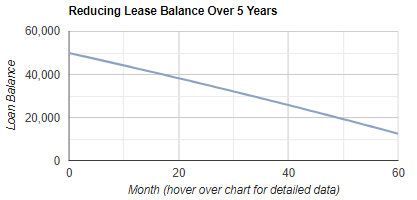
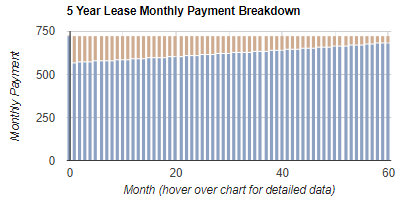
The following amortisation graphs detail month-by-month data on the progress of the proposed loan. The first chart below examines the reducing loan balance over the course of the finance contract term. The second graph illustrates the portion of each monthly repayment allocated to payment of interest vs principal reduction.
How to use our Plant & Equipment Lease Calculator
Our Plant & Equipment Lease Calculator helps business owners estimate lease repayments before you speak with a lender. It’s important because changing the residual (balloon), term and interest rate can materially affect cash flow, total interest paid and the end-of-term payout amount. The calculator provides estimates only and is general information, not personal advice; consider your objectives, financial situation and needs, and check the lease contract, fees and tax treatment with your accountant or adviser.
How to complete the calculator (best-practice order):
1. Purchase Price: Enter the total amount you want to finance, using whole numbers only (no dots or commas). Include relevant on-road and acquisition costs you intend to finance, such as applicable tax, stamp duty, registration, insurance or other costs.
2. Balloon or Residual Value: Choose the residual as a percentage of the purchase price. A higher residual usually lowers the ongoing repayments, but increases the amount due at the end and can increase the overall cost across the term. Select a residual that matches your expected end-of-term plan (refinance, trade-in, or pay out).
3. Term of Loan: Select the number of years. Longer terms typically reduce repayments but can increase total interest paid. Use a term that aligns with the asset’s useful life and how long you expect to keep it.
4. Interest Rate: Select a rate to simulate. The displayed range is indicative only; your actual rate depends on the lender and your circumstances and can only be confirmed after you apply.
5. Calculate: Run the estimate, then re-run scenarios to compare different residuals, terms and rates for a clearer view of affordability versus total cost.
How to interpret the results:
1. Repayment estimate: Treat this as a guide for budgeting, not a quote.
2. Residual due: Note the end-of-term balloon amount you’ll need to pay or refinance.
3. Amortisation graphs: Review how the balance reduces over time and how each repayment splits between interest and principal, which helps you understand cost versus payoff progress.
Recent vehicle finance commentary has put balloon and residual payments back in the spotlight, particularly for Australians considering cars, utes, vans, trucks or business equipment. The issue is not that balloon structures are inherently unsuitable. Used carefully, they can help borrowers manage cash flow by lowering regular repayments. The risk is that the smaller monthly figure can distract from the larger amount still payable at the end of the loan or lease term. - read more
Recent lending market coverage points to a more competitive spring for Australian borrowers, with some banks and non-bank lenders adjusting selected fixed and variable loan offers. The shift does not mean borrowing has suddenly become easy or cheap, but it does suggest lenders are again competing harder for well-prepared applicants with stable income, clean repayment histories and clear loan purposes. - read more
Recent small business lending commentary points to a continuing change in how Australian lenders are assessing finance requests: the focus is moving beyond annual accounts and into the day-to-day health of cash flow. For business owners seeking working capital, vehicle finance, equipment upgrades or short-term funding, that means bank statements, tax position and repayment conduct are becoming central to the conversation. - read more
A rejected loan application can be frustrating, but it can also provide useful information about your credit profile, income, debts or application details. Understanding why a lender declined your application can help you address the issues, prepare more carefully and approach future borrowing decisions with greater clarity. - read more
When you embark on the journey of securing a loan, one pivotal factor that looms large in the eyes of lenders is your debt-to-income ratio, commonly known as DTI. This crucial metric measures the chunk of your monthly income that goes towards paying debts, and it serves as a barometer for financial stability. A lower DTI can swing the doors wide open to favorable loan terms, while a higher one might signal red flags for potential lenders. - read more
Online loans have revolutionized the way Australians access finance. With the emergence of fintech and the convenience of the internet, obtaining a loan is now faster, easier, and often more customer-centric. When managed responsibly, the online loan application process empowers borrowers with quick funds for life's unexpected expenses or investments. However, the speed and simplicity of online transactions can also lead to common oversights. - read more